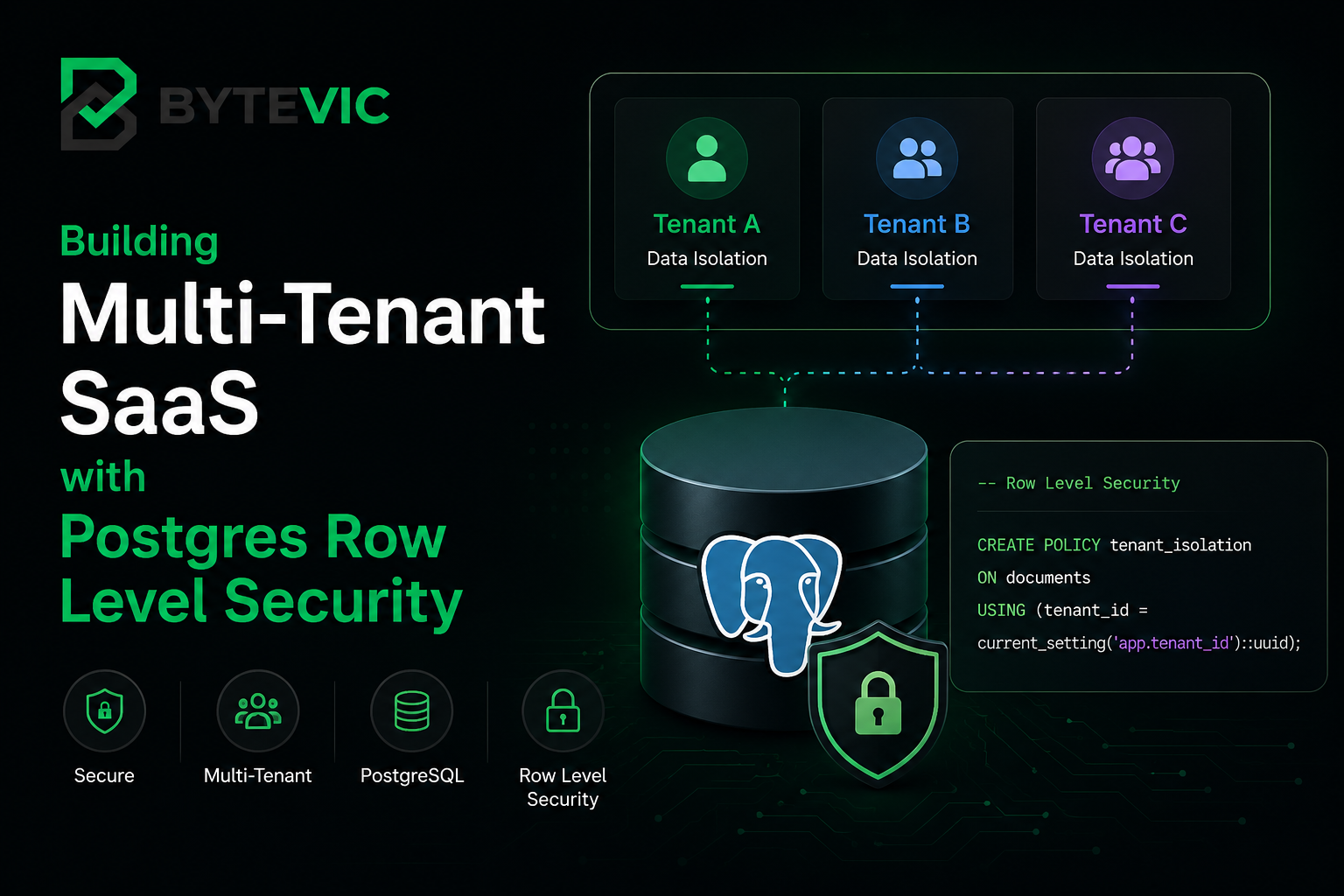
Multi-tenant architecture is the foundation of SaaS. Separating customer records securely is critical for data privacy compliance. In this guide, we explore how to configure PostgreSQL Row Level Security (RLS) to build a secure database layer.
1. Database Separation Strategies
SaaS builders choose between isolated databases per customer (expensive) or a shared database with tenant filters. Shared databases are cost-effective, but developers run the risk of querying data from another customer if a where clause is omitted.
2. Activating Row Level Security
PostgreSQL RLS isolates tenant records at the database level. Once activated, Postgres verifies that every SELECT, UPDATE, or DELETE query matches the active tenant's context, preventing cross-tenant data leaks even if application queries are missing filters.
-- Enable RLS on tables
ALTER TABLE client_records ENABLE ROW LEVEL SECURITY;

-- Create security policy matching current tenant session
CREATE POLICY tenant_isolation_policy ON client_records
  USING (tenant_id = current_setting('app.current_tenant_id'));
ByteVic Architecture Standard:
Our engineering team at ByteVic uses connection pools. Before executing queries, our middleware sets the active app.current_tenant_id configuration parameters inside the transaction loop, providing secure tenant isolation.
Conclusion
At ByteVic Systems, we build high-performance SaaS backends that process millions of requests securely. Contact our backend architecture experts to optimize your databases.